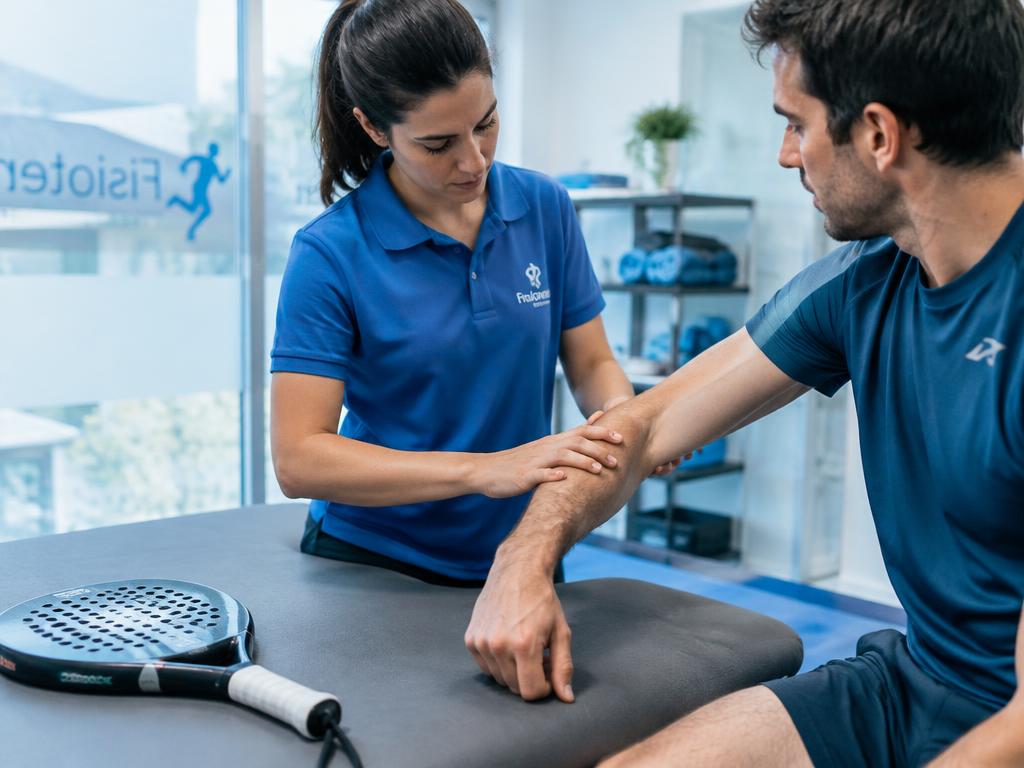
About Tennis Elbow & Shoulder Pain
Gripping a solid padel racket, hitting volleys and bandejas, and playing smashes overhead load the forearm, elbow and shoulder repeatedly. Pain on the outside of the elbow, often called tennis elbow, and shoulder pain are among the most common problems racket players report.
Similar symptoms can come from different structures, including the neck. An assessment helps identify the likely source and builds a plan around your playing demands.
Who may benefit
- Players with elbow pain when gripping, lifting or hitting
- Players with shoulder pain on overhead shots or serving
- Anyone whose pain has increased after changing racket, technique or playing frequency
Common reasons to seek an assessment
- Pain on the outside or inside of the elbow
- Weak or painful grip, for example when carrying a bag or opening a jar
- Shoulder pain when reaching overhead or lying on that side
- Pain that has persisted for weeks despite rest
What to expect during your consultation
- Questions about your symptoms, playing habits and equipment
- Examination of the elbow, shoulder and, if relevant, the neck
- Explanation of contributing factors such as load and grip
- A treatment plan that often includes graded strengthening and load management
Frequently asked questions
Is padel elbow the same as tennis elbow?
The term is often used for similar outer-elbow pain in padel players, but symptoms can have several causes and need an individual assessment.
Should I stop playing completely?
Not always. Many players adjust their load rather than stopping entirely. Your clinician can help you decide.
Will an elbow brace help?
Some people find a brace helpful in the short term. It is usually used alongside exercise and load changes, not as a standalone fix.
Who will assess me?
Exact availability, which clinician you see and any test options should be confirmed directly with Doctor St Julian’s Clinic.
PadelPhysioMalta.com provides general educational information about padel, exercise, injury prevention and sports health. It does not replace individual medical diagnosis, assessment or treatment. Persistent, severe or worsening symptoms should be assessed by an appropriate healthcare professional. For urgent or life-threatening symptoms, seek appropriate emergency medical care.